Kling 2.5 Turbo (pro)
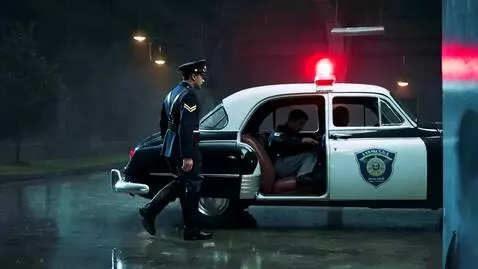
A hyper-realistic, ultra-detailed cinematic video sequence styled as a 1950s American police arrest and mugshot scene. Captured with a high-end digital camera emulating monochrome film grain, strong contrast, and cold overhead lighting, the sequence evokes the utilitarian and documentary style of mid-century law enforcement. The video opens outdoors at night on a rain-slicked street. Two uniformed officers approach a male suspect, informing him of the arrest. Their uniforms are rendered in precise historical detail: wool serge jackets with brass buttons, Sam Browne leather belts, peaked caps with polished visors, and boots reflecting the glow of street lamps. The suspect is restrained with steel handcuffs. He wears modest clothing—a collared shirt, trousers, and worn shoes. The officers guide him toward a waiting 1950s police car. The vehicle is a black-and-white patrol sedan of the era, with rounded fenders, chrome bumpers, a heavy steel body, and insignia on the doors. On the roof, a red rotating beacon glows, its light sweeping across wet pavement. Chrome hubcaps glisten under streetlights, the engine idling with a low rumble. The suspect is placed in the rear seat, its interior upholstered in dark vinyl with a steel divider. One officer closes the heavy door with a metallic thud, while the other takes the driver’s seat. The camera lingers on the flashing beacon as the car pulls away, casting shadows across the street. The sequence transitions to the police station. The suspect is escorted down a dim corridor lined with scuffed linoleum floors and buzzing fluorescent lights. He is taken into a booking room: plain plaster walls with a height chart, a wooden desk with forms, a rotary phone, and a typewriter. Harsh light reveals scratches on the desk and the texture of the uniforms. The mugshot procedure is performed with precision. A large-format press camera with a flashbulb captures both frontal and profile shots. The suspect holds a wooden placard with stenciled numbers. Close-ups reveal textures—pores of skin, fabric fibers, the grain of the placard, and the shine of ink. Fingerprinting follows, ink rolled carefully onto each finger before impressions are made. The sounds of typewriter keys and pens emphasize the bureaucratic rhythm. The final shots show photographs in a darkroom, clipped to a drying line, then filed in a manila folder. The sequence concludes with the file being archived, cementing the historical tone.