Hunyuan Video
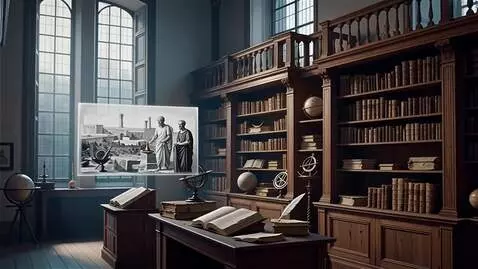
Create a video in this script for youtube channel educational post , use real historical image and backgrounds 🎓 Part 1: What Is Science? Understanding Its Meaning and Ancient Beginnings 🎙️ [Opening Narration — calm, educational tone] Welcome to this educational documentary series on the history and evolution of science — from its ancient beginnings to the modern world. Have you ever wondered: What is science? Who created it? And how did it all begin? In this six-part series, we’ll journey through time — exploring the definition of science, the origins of discovery, the great thinkers and scientists who shaped it, and how science continues to guide our world today. Let’s begin with Part One — What Is Science, and How Did It Begin? 🧠 Section 1: The True Meaning of Science The word “Science” comes from the Latin word “Scientia,” meaning knowledge or to know. But science is not just about knowing facts — it’s about discovering truth through evidence, logic, and observation. In simple terms, science is a systematic way of understanding the natural world. It asks: • What is happening? • Why is it happening? • How can we prove it? Unlike myth or superstition, science demands proof. It relies on experiments, measurements, and repeatable results. Famous thinkers throughout history tried to define science in their own way: • Aristotle (384–322 BCE) — one of the earliest philosophers of science — said: “Science is the knowledge of causes.” Meaning, to truly know something, we must understand why it happens. • Francis Bacon (1561–1626), known as the Father of Modern Science, explained that: “Science is knowledge gained by observation and experiment.” • And Albert Einstein (1879–1955) reminded us that: “Science is nothing but a refinement of everyday thinking.” In every age, science has been the human quest to turn curiosity into understanding. 🔭 Section 2: The Birth of Curiosity — Before Science Had a Name Before science became a formal discipline, there was only curiosity. Human beings have always wanted to understand the world around them — the stars, the seasons, life, and death. Imagine our earliest ancestors — thousands of years ago — watching the sunrise, the rain, and the movement of stars. They began to notice patterns — that certain stars appeared in specific seasons, that rain followed dark clouds, and that fire could transform wood into ash. These early observations were the seeds of science. Though they lacked laboratories or equations, they were the first scientists of nature. They experimented daily — trying plants, shaping tools, discovering fire — all through trial and error, the most basic form of experimentation.
Variations of the same prompt, generated by different AI models…