Home
Discover
Premiums
Generate AI Video
Contest
Upload
Profile
Prefs
Theme
Top Accounts
Top Videos
English
About
Feedback
Support
T&C
Privacy
DMCA
© 2026 HUGE.com
Filters
Sign Up
Log In
AI Video Generator
Browse AI Generated Videos
Videos
all
by ai model
AI Models
Kling 2.5 Turbo (pro):
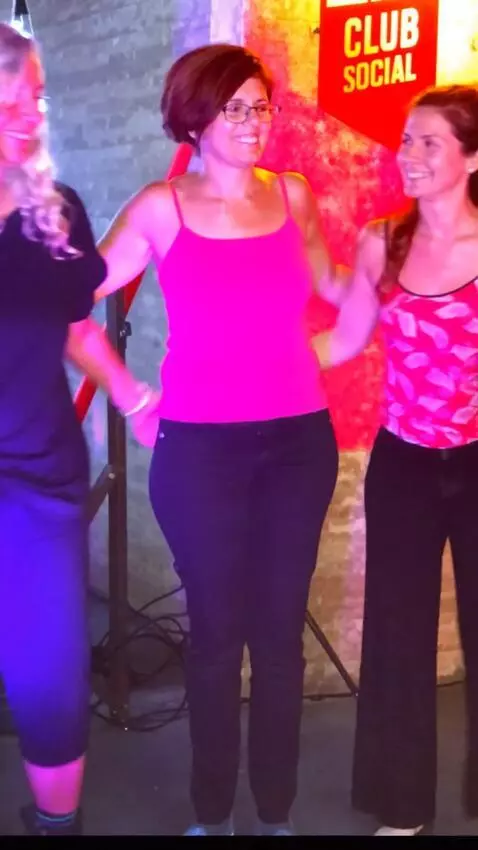
The women on the sides leave and two 58 year old swinger wives hugs the woman in the middle
Sora 2:
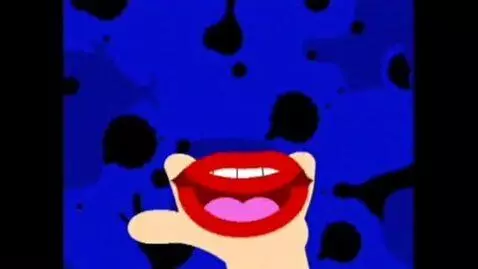
The background starts with an purple static, The background changes into a dark blue background with black ink splat. The hand puts a mouth at the bottom and the eyes appears at the top. The mouth says "Klasky Chupo" The white text appears which says "Klasky Csupo" The Background turns into black and the eyes, and the mouth disappears. The Y turns into purple. The duck quacking sound effect plays in Two times. and the Boing sound effect plays in One time.
LTX-2 Pro:
short blonde haired girl blue eyes, glasses, casual attire, sitting in a leather chair, reading a book, in side her luxury flay , in the middle of London,
Sora 2:
audacity tutorial ytp
Sora 2:
Crie um trailer do filme da DreamWorks "A MISSÃO DE ESTHER PRISCILA O FILME" pra 2024 nos cinemas
Sora 2:
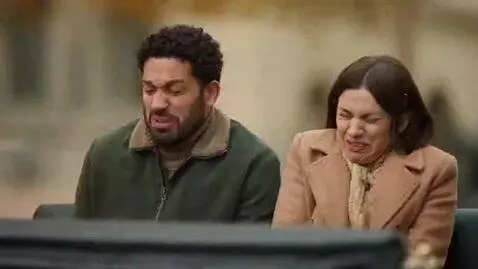
A shot of a white carriage horse lifting and raising its tail to inadvertently fart at the passengers sitting directly behind it and causing them to react to it while facing the horse's rear and are engulfed in the slightly transparent greenish brown fart, including cutting to a shot of the horse's face at the end, then the horse lets out another fart again from its rear at them, with various shots including a close up and a side view shot and another dynamic angle shot.
PixVerse v5:
The video starts whit a blue screen, then a black ink splashes on the screen, then a hand throws two yellow rectangle and on the yellow rectangle it has human eyes and the other one has human mouth, now in 2 seconds the yellow rectangle whit the mouth says "Splaat, Klasky Csupo" Then the both yellow rectangles disappear and appears a text whit the letters on squares and the text says "KLASKY CSUPO" And then, You make DJ Sounds and gibberish talking in 5 seconds, then the video ends, also, you must add the VHS (Duration 10 Seconds)
Wan 2.5 Preview:
The video starts whit a blue screen, then a black ink splashes on the screen, then a hand throws two yellow rectangle and on the yellow rectangle it has human eyes and the other one has human mouth, now in 2 seconds the yellow rectangle whit the mouth says "Splaat, Klasky Csupo" Then the both yellow rectangles disappear and appears a text whit the letters on squares and the text says "KLASKY CSUPO" And then, You make DJ Sounds and gibberish talking in 5 seconds, then the video ends, also, you must add the VHS (Duration 10 Seconds)
Sora 2:
Animation Prompt Use the uploaded square album-cover image as the exact visual reference and opening frame. Create a 10-second, 1:1 cinematic animated music-cover sequence with an intense, gritty rock-rap rebellion atmosphere. Begin with a slow camera push through the dark concrete corridor toward the central figure. Heavy chains along both walls sway slightly and vibrate from the force of the crowd. Dust, ash, torn paper and small fragments of concrete drift through the air. The broken ceiling continues cracking subtly as a few pieces fall in dramatic slow motion. The crowd surges with controlled energy: fists rise, protest signs shake naturally, clothing moves in the wind, and distant people jump and chant. Keep the central rebel facing away from the camera. He firmly raises his clenched fist higher as his black jacket and red bandana move in the turbulent air. Add brief flashes from cameras and phones throughout the crowd. The stacked speakers pulse with powerful bass, making nearby dust and loose debris tremble. Red warning lights flicker across the walls while bright golden sunlight bursts through the destroyed opening behind the figure. The city skyline remains visible through smoke and airborne debris. Add subtle red and white light pulses timed like the opening beat of an explosive rock-rap anthem. Animate the title “BREAK THE STATIC” with restrained energy: the white brush lettering remains perfectly readable and in its original position while lightly vibrating from the bass. A quick red electrical glitch travels across the word “THE”, followed by a brief static distortion around the edges of the title. The subtitle “ROCK. RAP. REVOLUTION.” glows red for a moment and then returns to normal. End with the camera close behind the central figure as the crowd raises more fists. A powerful shockwave moves outward from the speakers, sending dust and paper toward the camera. The screen briefly glitches with red-and-white static before returning to the complete album cover for a clean final frame suitable for looping. Visual style: photorealistic cinematic realism, dark urban industrial setting, dramatic contrast, black, white and blood-red colour palette, volumetric sunlight, realistic smoke, detailed particles, handheld concert-film intensity, controlled camera shake, sharp 4K detail. Important restrictions: Preserve the original square composition, title, subtitle, protest signs, parental-advisory label, crown symbol and all existing artwork. Keep every word correctly spelled and readable. Do not replace, rewrite, warp or invent text. No facial reveal, no extra limbs, no distorted hands, no melting objects, no cartoon styling, no excessive camera movement and no scene cuts.
Sora 2:
The background starts with dark blue with black ink splat. The hand puts a yellow rectangle with red human mouth at the bottom, then the yellow rectangle with blue human eyes appears. The yellow rectangle with red human mouth says "Splaat! Klasky csupo" and the dark gray text in cubes appears which says "Klasky Csupo" The background turns into black and the yellow rectangle with blue human eyes and the yellow rectangle with red human mouth disappears. The Y turns into purple and the duck quacking sound plays in 2 times and the boing sound effect plays in 1 time.
Sora 2:
The background starts with dark blue with black ink splat. The hand puts a yellow rectangle with red human mouth at the bottom, then the yellow rectangle with blue human eyes appears. The yellow rectangle with red human mouth says "Splaat! Klasky csupo" and the white text in cubes appears which says "Klasky Csupo" The background turns into black and the yellow rectangle with blue human eyes and the yellow rectangle with red human mouth disappears. The Y turns into purple and the duck quacking sound plays in 2 times and the boing sound effect plays in 1 time.
Kling 2.1 (pro):
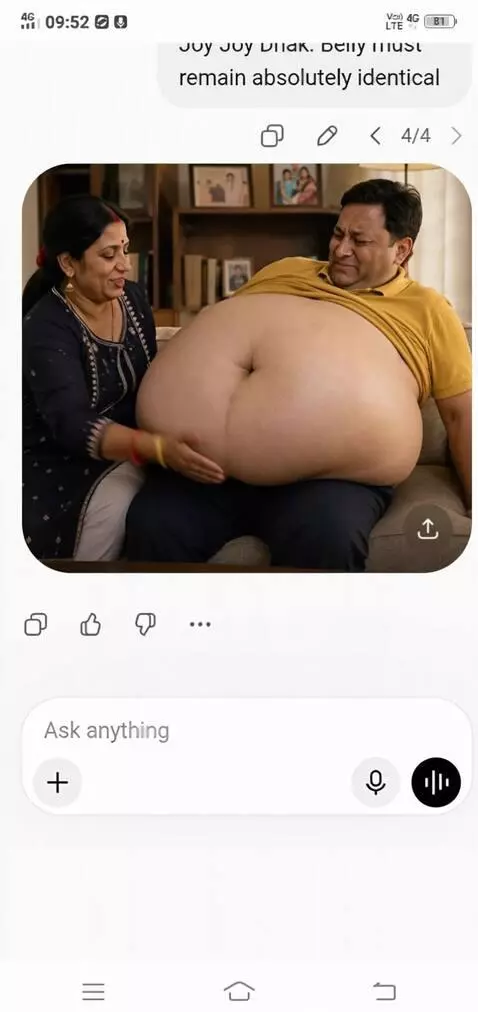
Create a video where this lady has kept her right hand below this huge fat belly and she suddenly shakes this huge fat belly of this man with her right hand
Sora 2:
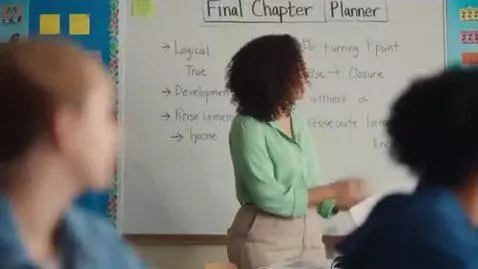
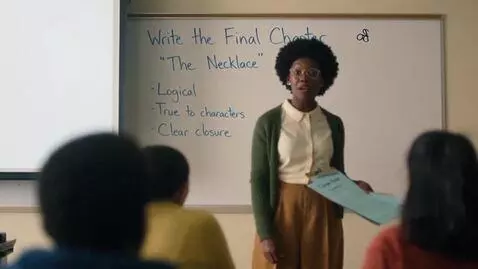
5 MINUTE VIDEO MICRO-TEACHING SCRIPT (Condensed) Lesson: Writing the Final Chapter of The Necklace Duration: 6–8 minutes Scene 1 – Transition Teacher: Excellent work, everyone! I really enjoyed your ideas from the Secret Letter activity. You gave thoughtful advice to Mathilde and used excellent vocabulary. Today, we're going to use those ideas to become authors. Today, you will write the final chapter of The Necklace. How does that sound? Students: Sounds interesting! Teacher: Great! Scene 2 – Introduce the Writing Task Teacher: Imagine that you are Guy de Maupassant, the author of The Necklace. Your task is to write the final chapter of the story. Remember three important rules: Your ending must be logical. It must stay true to the original story and characters. It should give the reader a clear sense of closure. CCQ Can Mathilde suddenly become a queen? Students: No. Teacher: Why not? Students: Because it doesn't fit the story. Teacher: Exactly! Everything in your ending should make sense. Can we suddenly introduce aliens? Students: No! Teacher: Correct. Your ending should always remain believable. Scene 3 – Explain the Prompt Teacher: (Read the prompt.) You may decide whether Mathilde solves her problem or not. There isn't only one correct ending, but every ending must be logical and meaningful. CCQ Does everyone have to write exactly the same ending? Students: No. Teacher: Exactly. Different endings are welcome if they fit the story. Scene 4 – Introduce the Planner Teacher: Before good writers begin writing, they organize their ideas. Today we'll use a Final Chapter Planner to help us plan before we write. Good writing starts with good planning. Scene 5 – Teacher Model (Think Aloud) Teacher: Let's complete the planner together. Opening First, I ask myself, "What happened last?" The story ends when Mathilde discovers the necklace was fake. My opening should connect to that moment. I'll write: "Mathilde stood silently after hearing the shocking truth about the necklace." Why is this a good opening? Because it connects directly to the original story. CCQ Should I begin by saying, "Mathilde became a famous singer"? Students: No. Teacher: Exactly. It doesn't fit the story. Development Now I ask, "What happens next?" Maybe Mathilde talks with her husband and reflects on everything they lost. I'll write: "Mathilde and her husband discuss how their lives changed because of one mistake." Each event should naturally lead to the next. Turning Point Now we need the most important moment—the turning point. I'll choose this idea: "Mathilde realizes that honesty and gratitude are more valuable than wealth." This changes her thinking and the direction of the story. CCQ Does every story need an important moment that changes something? Students: Yes. Resolution Next, I show the consequences. "She begins to appreciate her life and stops comparing herself with others." This shows how the turning point affects her future. Ending Finally, I finish the story with closure. "Although she could never recover the lost years, Mathilde finally understood that true happiness comes from honesty, humility, and gratitude." This ending feels complete and connects to the story's theme. Scene 6 – Review Teacher: Let's review. What does the Opening do? Students: It connects to the last chapter. What does the Development do? Students: It shows what happens next. What is the Turning Point? Students: The biggest change. What does the Resolution show? Students: The results. Why do we need an Ending? Students: To give the reader closure. Teacher: Excellent! We've organized our ideas, and now writing will be much easier.
Kling 2.1 (pro):
GIRL JUMPS ON BOY IN LIFT AND KISS POSITION GIRL WEIGHT 100 KG BOY WEIGHT 45KG GIRL LIP KISSING WITH BOY GIRL BOTH HANDS ON BOY FACE GIRL THIGHS HIPS STOMACH ALL VISIBLE AND BOY HANDS ON GIRL HIPS PRESSING
Sora 2:
MICRO-TEACHING SCRIPT (Condensed) Lesson: Writing the Final Chapter of The Necklace Duration: 6–8 minutes Scene 1 – Transition Teacher: Excellent work, everyone! I really enjoyed your ideas from the Secret Letter activity. You gave thoughtful advice to Mathilde and used excellent vocabulary. Today, we're going to use those ideas to become authors. Today, you will write the final chapter of The Necklace. How does that sound? Students: Sounds interesting! Teacher: Great! Scene 2 – Introduce the Writing Task Teacher: Imagine that you are Guy de Maupassant, the author of The Necklace. Your task is to write the final chapter of the story. Remember three important rules: Your ending must be logical. It must stay true to the original story and characters. It should give the reader a clear sense of closure. CCQ Can Mathilde suddenly become a queen? Students: No. Teacher: Why not? Students: Because it doesn't fit the story. Teacher: Exactly! Everything in your ending should make sense. Can we suddenly introduce aliens? Students: No! Teacher: Correct. Your ending should always remain believable. Scene 3 – Explain the Prompt Teacher: (Read the prompt.) You may decide whether Mathilde solves her problem or not. There isn't only one correct ending, but every ending must be logical and meaningful. CCQ Does everyone have to write exactly the same ending? Students: No. Teacher: Exactly. Different endings are welcome if they fit the story. Scene 4 – Introduce the Planner Teacher: Before good writers begin writing, they organize their ideas. Today we'll use a Final Chapter Planner to help us plan before we write. Good writing starts with good planning. Scene 5 – Teacher Model (Think Aloud) Teacher: Let's complete the planner together. Opening First, I ask myself, "What happened last?" The story ends when Mathilde discovers the necklace was fake. My opening should connect to that moment. I'll write: "Mathilde stood silently after hearing the shocking truth about the necklace." Why is this a good opening? Because it connects directly to the original story. CCQ Should I begin by saying, "Mathilde became a famous singer"? Students: No. Teacher: Exactly. It doesn't fit the story. Development Now I ask, "What happens next?" Maybe Mathilde talks with her husband and reflects on everything they lost. I'll write: "Mathilde and her husband discuss how their lives changed because of one mistake." Each event should naturally lead to the next. Turning Point Now we need the most important moment—the turning point. I'll choose this idea: "Mathilde realizes that honesty and gratitude are more valuable than wealth." This changes her thinking and the direction of the story. CCQ Does every story need an important moment that changes something? Students: Yes. Resolution Next, I show the consequences. "She begins to appreciate her life and stops comparing herself with others." This shows how the turning point affects her future. Ending Finally, I finish the story with closure. "Although she could never recover the lost years, Mathilde finally understood that true happiness comes from honesty, humility, and gratitude." This ending feels complete and connects to the story's theme. Scene 6 – Review Teacher: Let's review. What does the Opening do? Students: It connects to the last chapter. What does the Development do? Students: It shows what happens next. What is the Turning Point? Students: The biggest change. What does the Resolution show? Students: The results. Why do we need an Ending? Students: To give the reader closure. Teacher: Excellent! We've organized our ideas, and now writing will be much easier.
«
359
360
361
362
363
»
You need to enable JavaScript.